Dopamine on Demand: What Metaverse Reward Loops Are Actually Doing to Your Student's Brain
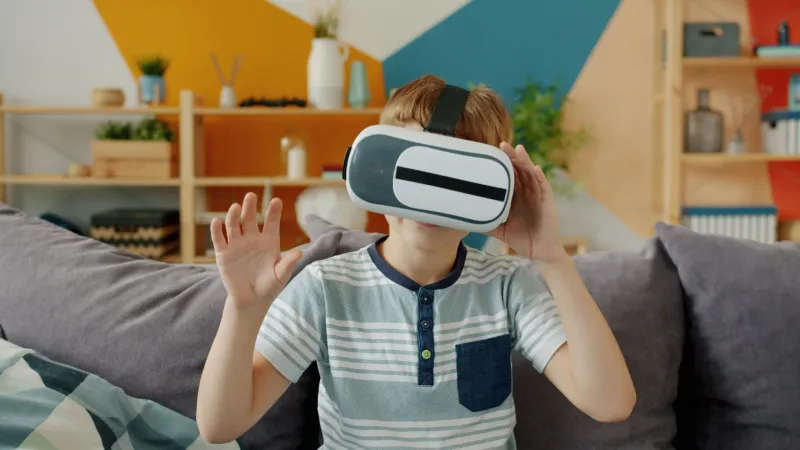
Imagine your kid sits down to "study" in their school's metaverse platform. An hour later, they've collected fourteen achievement badges, unlocked a new avatar costume, and climbed three spots on the class leaderboard. They feel great. They feel accomplished.
But did they actually learn anything?
That's the question parents, educators, and neuroscientists are starting to ask out loud — and the answers are more complicated than most metaverse platform developers would like to admit.
Your Brain on Virtual Gold Stars
Here's the basic neuroscience, and it's worth understanding because it explains a lot. When your brain anticipates or receives a reward — any reward, real or virtual — it releases dopamine. That's the neurotransmitter associated with motivation, pleasure, and reinforcement. Your brain doesn't particularly care whether the reward is a paycheck, a piece of chocolate, or a glowing digital trophy that only exists inside a server somewhere in Virginia.
The response is remarkably similar across all three.
This is not an accident. The designers of metaverse education platforms — many of whom come directly from the gaming industry — know exactly how reward schedules work. Variable ratio reinforcement, the same mechanism that makes slot machines so compelling, is baked into many of these platforms. Sometimes you get a reward after five actions, sometimes after fifteen. That unpredictability is precisely what keeps brains hooked and hands moving.
"These systems are incredibly well-engineered," says one educational psychologist who studies immersive learning environments. "The problem is they're well-engineered for engagement, not necessarily for learning."
When Chasing Points Replaces Chasing Understanding
There's a meaningful difference between a student who reads a chapter because they want to understand the Civil War and a student who reads a chapter because they want the XP points that come after completing the quiz. Both students might finish the chapter. Only one is building what researchers call intrinsic motivation — the internal drive to learn for learning's sake.
Intrinsic motivation is, according to decades of educational research, one of the strongest predictors of long-term academic success. It's what turns a curious middle schooler into a self-directed adult learner. Extrinsic rewards — badges, leaderboard rankings, virtual currency — can actually undermine intrinsic motivation when they're overused. This is called the overjustification effect, and it's been documented since the 1970s. The metaverse just gave it a very shiny new interface.
The concern isn't that virtual rewards are inherently bad. Used thoughtfully, they can scaffold early engagement, especially for students who struggle to connect with traditional classroom formats. The problem emerges when the reward system becomes the point — when students are optimizing for badges rather than for understanding.
The Engagement Metric Trap
Platform developers measure success through engagement metrics: time spent, actions completed, return visit rates. These numbers look great in investor decks and school board presentations. They're also, on their own, pretty terrible measures of actual learning.
A student who spends ninety minutes clicking through a metaverse science module to collect virtual lab equipment isn't necessarily absorbing the chemistry concepts the module is supposed to teach. But from the platform's analytics dashboard, they look like a highly engaged, successful learner.
Some forward-thinking platforms are starting to build in what they call "mastery-based" progression — meaning students can't advance or earn rewards until they demonstrate genuine comprehension. That's a better model. But it's far from universal, and parents usually have no visibility into which approach their child's school has adopted.
What Parents Can Actually Do
You don't need a neuroscience degree to help your kid develop a healthier relationship with virtual incentives. A few practical moves make a real difference.
Talk about the design, not the content. Ask your kid how the platform makes them feel when they earn a reward versus when they figure something out on their own. Building metacognitive awareness — thinking about thinking — helps students recognize when they're being manipulated by a reward loop versus genuinely motivated to learn.
Watch for the "just one more" pattern. If your child is reluctant to stop a learning session not because they're fascinated by the material but because they're close to the next reward tier, that's a signal worth paying attention to. It mirrors the same behavior patterns seen in gaming addiction research.
Ask about the learning, not the score. Instead of "How many points did you earn today?" try "What's the most interesting thing you figured out today?" Shifting the conversational frame at home reinforces the idea that understanding is the actual goal.
Request platform transparency from schools. Parents have every right to ask administrators how the metaverse platforms their kids use measure learning versus engagement, and what the school's policy is on reward-heavy design features.
What Educators Can Do Right Now
Teachers working inside metaverse platforms have more influence over this dynamic than they might realize. Most platforms allow educators to customize or even disable certain gamification features. It's worth exploring what's actually configurable in whatever system your school uses.
Beyond the settings menu, building in regular reflection moments matters enormously. Before a virtual session ends, ask students to write one sentence — in the metaverse or out of it — describing something they genuinely understood today, not something they earned. That small habit reinforces the idea that comprehension is the currency that actually matters.
Some educators are also experimenting with what one teacher in Ohio calls "reward audits" — periodic class discussions about how the platform's incentive structure works and how students feel about it. Treating students as savvy consumers of technology, rather than passive users, builds exactly the kind of critical digital literacy they'll need as adults.
The Bigger Picture
None of this means metaverse learning platforms are bad. Many of them genuinely expand access to engaging, interactive educational experiences that traditional classrooms simply can't replicate. A student who would never sign up for an after-school chemistry club might spend hours in a virtual lab because the environment feels alive and responsive in a way a textbook never will.
But the attention economy is real, and it doesn't take a vacation just because the platform has "edu" in its name. The dopamine loop doesn't know the difference between a lesson and a level. That's why the adults in the room — parents, teachers, administrators — need to stay curious, stay skeptical, and keep asking the question that actually matters: not "Is my kid engaged?" but "Is my kid learning?"