AI in the Classroom, Human at the Heart: The Real Cost of Replacing Teachers With Virtual Tutors
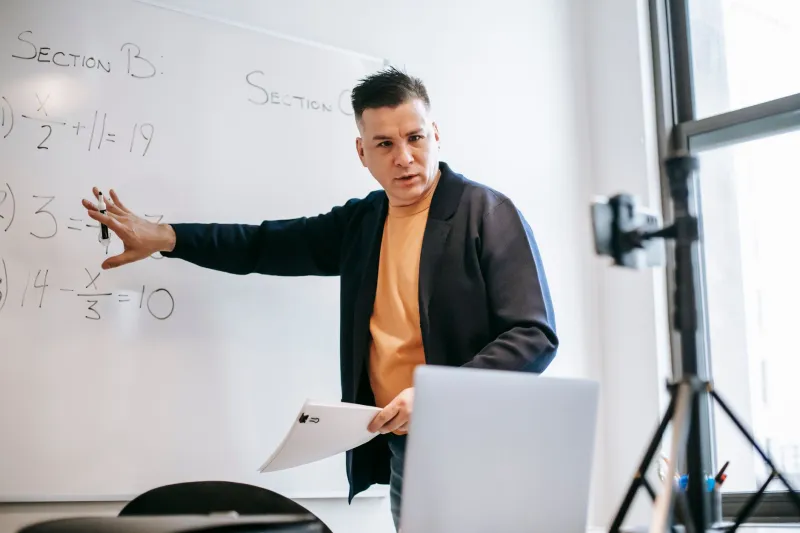
Walk into a staffing meeting at almost any school district in America right now and you'll feel it — that specific tension between what's needed and what's available. According to the Learning Policy Institute, the US faces a shortage of tens of thousands of qualified teachers, a number that's been climbing steadily since the pandemic reshuffled who wants to work in education and under what conditions.
Into that gap steps a growing wave of AI-powered tutoring systems, intelligent virtual assistants, and — increasingly — fully realized AI avatars operating inside metaverse learning environments. These aren't chatbots bolted onto a lesson plan. Some of them are genuinely impressive: adaptive, patient, available at 2 a.m., never burned out, and capable of delivering personalized instruction at a scale no human teacher could match.
So the question isn't really can AI tutors fill the teacher shortage. In many narrow, measurable ways, they already can. The question is what gets quietly lost when they do.
What AI Tutors Actually Do Well
Let's be fair about this. Intelligent tutoring systems have a legitimate track record. Carnegie Learning's MATHia platform, for example, has been shown in multiple studies to produce meaningful gains in math proficiency — in some cases outperforming traditional instruction for specific skill-building tasks. Platforms like Khanmigo, Khan Academy's AI assistant, are being piloted in districts across the country with promising early results.
In metaverse environments, these capabilities get a significant upgrade. An AI tutor operating inside a virtual learning space can respond to a student's avatar movements, adjust the difficulty of a task based on hesitation patterns, offer hints calibrated to individual learning histories, and do all of this simultaneously for thirty students in the same virtual room. No human teacher — no matter how talented — can split their attention that finely.
For students who need repetition without embarrassment, who learn better without the social pressure of a physical classroom, or who are in districts where a qualified teacher simply doesn't exist in a particular subject area, this isn't a consolation prize. It's a genuine lifeline.
"We have rural districts in this country where a kid who wants to take AP Chemistry has exactly zero options because there's no one to teach it," says one ed-tech developer who asked not to be named due to ongoing contract negotiations. "An AI tutor in a well-designed virtual lab isn't replacing a teacher. It's replacing nothing — because nothing was the only other option."
The Relationship Gap That Data Can't Measure
But spend time talking to teachers, and a different picture emerges — one that doesn't show up cleanly in outcome metrics.
"I have a student right now who I'm pretty sure is dealing with something at home," says a middle school English teacher in suburban Ohio. "I know because of how she walked into class on Tuesday. How she looked at the floor. An AI would have seen her engagement scores and moved on. I pulled her aside."
This is the piece that's genuinely hard to replicate algorithmically: the accumulated, embodied knowledge a teacher develops about a specific child over weeks and months. The recognition that this particular kid shuts down when called on unexpectedly, or that this one lights up when given creative latitude, or that a sudden drop in participation means something worth investigating.
Researchers call this relational trust, and it's not a soft or optional feature of education. Studies consistently show that students — especially those from low-income backgrounds, students of color, and students with learning differences — perform better academically when they have at least one adult at school who knows them and believes in them. That relationship doesn't just feel good. It functions as a protective factor against dropout, chronic absenteeism, and disengagement.
An AI avatar, however sophisticated, cannot yet replicate that. It can simulate warmth. It cannot actually care.
The Hybrid Middle Ground
Most serious voices in this conversation aren't arguing for pure AI replacement or pure human-only instruction. They're pointing toward something in between — and the metaverse, interestingly, might be the environment best suited to making that hybrid work.
Imagine a virtual classroom where an AI tutor handles the adaptive, individualized skill practice — freeing the human teacher from the mechanical grind of differentiation at scale — while the teacher focuses on what they're uniquely qualified to do: facilitate discussion, notice struggling students, build community, and bring the kind of responsive, contextual judgment that no algorithm can match.
"The goal shouldn't be to replace teachers with AI," argues Dr. Linda Darling-Hammond, president of the Learning Policy Institute and one of the country's most respected voices on educator development. "The goal should be to use AI to give teachers back the time and bandwidth to be more human."
Some metaverse platforms are already experimenting with this model. Engage, a virtual collaboration platform used in higher education, allows instructors to move through immersive environments alongside students while AI tools handle real-time translation, captioning, and individualized content delivery in the background. The teacher remains the relational anchor. The AI handles the logistics.
Who Gets the Bot and Who Gets the Teacher?
There's an equity dimension to this conversation that doesn't get enough airtime. When AI tutors are positioned as solutions to the teacher shortage, it's worth asking: which students will be handed the algorithm, and which will get the human?
Historically, when American education has scaled up technology-based solutions, they've tended to land most heavily in under-resourced districts — the same districts already contending with higher rates of poverty, trauma, and need for relational support. Well-funded suburban schools, meanwhile, continue to attract and retain experienced human teachers.
If the AI tutor becomes the default for students who need the most, and the human teacher remains the premium for students who already have advantages, the technology doesn't close the equity gap. It codifies it.
This is a policy question as much as a technology question. And it's one that educators, administrators, and community members need to be pushing loudly — before the defaults get set by market forces rather than educational values.
The Question Worth Sitting With
None of this means AI tutors and metaverse learning environments are wrong for American classrooms. They're not. Used thoughtfully, they represent a genuine expansion of what's possible for students who currently have too few options.
But the framing matters enormously. "Can AI replace teachers?" is ultimately the wrong question, because it treats teaching as a delivery mechanism — a way of getting content from point A to point B — when the best educators know it's something much harder to define and much more essential to get right.
The better question is: how do we build virtual learning environments that amplify what human teachers do best, extend reach to students who have none, and refuse to use the teacher shortage as an excuse to quietly lower our expectations for what education should feel like?
The metaverse can be a place where every student has access to a brilliant, patient, always-available tutor. It can also be a place where human educators show up more fully, freed from logistical burden, present for the moments that actually change a kid's trajectory.
Both things can be true. But only if we're intentional enough to demand it.