Millions for the Metaverse, Minutes for the Teachers: Why Professional Development Is the Weakest Link in Virtual Education
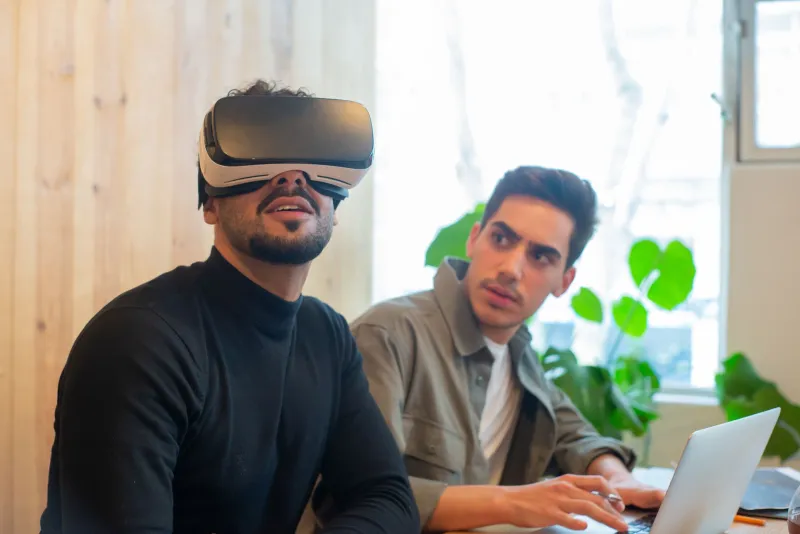
Picture this: A middle school in suburban Ohio gets a shiny new allocation of VR headsets, a district-licensed metaverse learning platform, and a rollout date circled on the calendar. Teachers are handed a two-hour Saturday workshop, a PDF guide, and a cheerful "you've got this!" from administration. By week three, half the headsets are sitting in a closet.
This story isn't unique. Across the United States, school districts are pouring serious money into metaverse infrastructure — platforms, hardware, licensing, and broadband upgrades — while treating teacher training as an afterthought. The result is a quiet but costly mismatch: cutting-edge technology operated by educators who feel anything but prepared to use it.
The Investment Imbalance Is Real
The numbers are hard to ignore. The global market for education-focused VR and AR technology is projected to surpass $32 billion by 2030, and U.S. districts are contributing their share. Federal relief funds and state technology grants have accelerated hardware purchases considerably since 2021. But when researchers and educators look closely at how those budgets break down, professional development consistently gets the short end.
A 2023 survey by the EdWeapon Research Center found that fewer than 30% of teachers who had been assigned to teach in virtual or immersive environments felt "adequately prepared" to do so. The most common complaint? Training that was too short, too generic, and completely disconnected from their actual subject area or grade level.
That's not a technology problem. That's a people problem.
What Two Hours Can't Teach You
Think about what it actually takes to run a classroom — even a traditional one. Lesson planning, differentiation, behavior management, assessment design, relationship-building. Now layer on a three-dimensional virtual environment where students are represented by avatars, where spatial audio creates new distraction dynamics, and where technical glitches can derail an entire lesson in seconds.
A two-hour onboarding session can show a teacher how to log in. It cannot teach them how to manage a chaotic virtual field trip with 28 fifth graders, how to identify when a student is disengaged versus genuinely struggling inside a VR headset, or how to adapt a lesson on the fly when the platform crashes mid-activity.
"The training I got was basically a product demo," said one high school history teacher from a district in central Texas who asked not to be named. "I knew how to click through the menus. I had no idea how to actually teach in there."
This sentiment echoes across teacher forums, social media groups, and education conferences. The gap between what training promises — confident, tech-forward educators ready to transform learning — and what it delivers is wide enough to swallow entire programs whole.
The Hidden Cost of Skipping the Learning Curve
When teachers feel underprepared, the consequences ripple outward fast. Student engagement drops when lessons feel disorganized or when educators spend class time troubleshooting instead of teaching. Parents grow skeptical. And the educators themselves — many of whom were already stretched thin before being handed a new technology mandate — burn out.
There's also a confidence loop at work here. Teachers who struggle early with metaverse tools tend to retreat to familiar methods, using VR environments as glorified video players rather than interactive spaces. The technology gets blamed for poor outcomes that were actually caused by inadequate preparation. Districts lose faith in their investment. And the cycle repeats.
This is the paradox at the center of metaverse education right now: the very people responsible for making these environments work are the ones least supported in learning how to use them.
What the Districts Getting It Right Are Doing Differently
Here's the good news — some schools have cracked this. And what they're doing isn't complicated. It's just intentional.
Extended, phased onboarding. Districts like Mooresville Graded School District in North Carolina and several pilot schools in Arizona have moved away from the one-day workshop model entirely. Instead, they build training into the school year through monthly sessions, embedded coaching, and dedicated planning periods for teachers to experiment without the pressure of a live class.
Peer learning cohorts. Rather than relying solely on outside consultants or platform reps, successful schools identify early-adopter teachers and build internal mentorship structures. When a fourth-grade teacher can walk down the hall and ask a colleague who's been doing this for a semester, the learning sticks differently.
Subject-specific training, not one-size-fits-all. A high school chemistry teacher and a second-grade reading teacher need completely different things from a virtual environment. The best training programs acknowledge this and tailor sessions accordingly — including how to design assessments, manage pacing, and adapt curriculum for immersive formats.
Sandbox time. This sounds obvious, but it's often skipped. Teachers need unstructured time to simply play in the metaverse — to make mistakes, explore features, and build comfort before students are involved. Schools that build sandbox time into their rollout timelines report significantly higher teacher confidence scores at launch.
Honest feedback loops. The districts seeing the most sustainable success are the ones that ask teachers what's not working — and actually change course based on the answers. That means treating professional development as an ongoing conversation, not a one-time checkbox.
The Roadmap Forward
If your district is planning a metaverse rollout — or already in the middle of one — the single most important question to ask is this: Are we resourcing teacher preparation at the same level we're resourcing the technology itself?
If the answer is no, the technology will underperform. Not because it isn't capable, but because the humans guiding it haven't been given what they need to succeed.
That means budgeting real time — not a Saturday afternoon, but weeks of structured learning spread across a semester. It means hiring or designating instructional coaches who understand both pedagogy and immersive tech. It means listening to teachers about where they feel lost and responding with specific, practical support.
The metaverse holds genuine promise for education. Virtual environments can reach students who've been left behind by traditional classrooms, bring history and science to life in ways no textbook can, and create learning experiences that are genuinely unforgettable. But none of that potential is unlocked by hardware alone.
The teacher standing in front of — or inside — that virtual classroom is still the most important variable in the equation. It's past time we treated their preparation like it.