Virtual Gold, Real Confusion: A Parent's Plain-English Guide to Your Kid's In-World Money
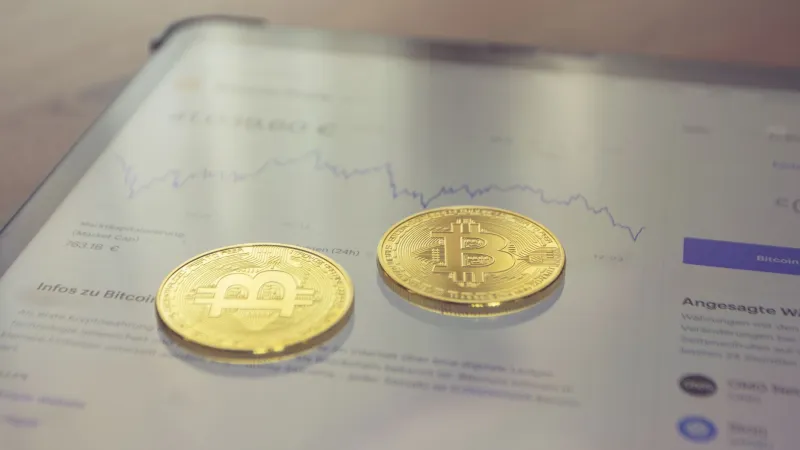
Your seventh grader comes home and casually mentions they spent their "EduCoins" on a new avatar outfit and now they can't afford the in-world field trip. You nod like you know what they're talking about. You do not know what they're talking about.
If that scenario sounds familiar, you're in good company. Virtual currencies have quietly become a standard feature of metaverse learning platforms — and most parents are navigating them with zero context. Let's fix that.
First, What Even Is a Virtual Classroom Economy?
A lot of educational metaverse platforms — think platforms designed for middle and high school students in particular — build mini-economies right into the learning experience. Students earn digital currency by completing assignments, attending class, hitting milestones, or demonstrating good behavior. They can then spend that currency on things within the platform: avatar customization, access to special areas or events, tools that help with projects, or sometimes just bragging rights.
The idea behind this isn't frivolous. Educators and platform designers argue that these systems teach real financial concepts in a low-stakes environment. Budgeting, saving, opportunity cost, trade-offs — these are legitimately valuable lessons, and a virtual economy can make them tangible in a way that a textbook exercise just can't.
But the execution varies wildly from platform to platform, and the line between educational tool and engagement manipulation can get blurry fast.
The Different Types of In-World Currency (Yes, There's More Than One)
Not all virtual money works the same way, and knowing the difference matters.
Earned currency is the most straightforward. Students complete tasks and receive digital tokens — let's call them EduCoins, though every platform has its own branding. This type is generally benign and genuinely educational. It mirrors how income works in the real world: you do work, you get paid.
Achievement-based currency is similar but tied specifically to performance benchmarks. Score above a certain threshold on a quiz, and you unlock a currency bonus. This can motivate students, but it can also create stress or discourage kids who are already struggling academically.
Premium currency is where parents need to pay close attention. Some platforms have a secondary currency tier that can only be obtained through real-money purchases — either by the student's family directly or through a school account funded externally. If your child is mentioning that other kids have things they can't get through regular gameplay, ask questions. There may be a real-money layer you weren't told about.
Tradeable currency exists on platforms where students can exchange goods or currency with each other. This introduces concepts like supply and demand, negotiation, and market value — genuinely interesting economic lessons — but it can also create social hierarchies where wealthier (in virtual terms) students have outsized influence.
What These Systems Are Supposed to Teach
At their best, virtual economies in educational settings are doing something pretty remarkable: they're making abstract financial concepts visceral. When a student has to choose between spending their in-world savings on something fun right now versus saving up for something better later, they're experiencing delayed gratification in a context that actually matters to them.
Platforms designed with strong educational intent often build explicit lessons around their economies. Students might track their virtual income and expenses in a ledger, analyze their spending patterns, or participate in simulated market events where prices fluctuate based on collective behavior. Some high school programs use these systems to introduce concepts like inflation, taxation, and even basic investing.
For students who've never had a bank account or watched a parent manage a budget, this kind of experiential learning can be genuinely formative. Research on financial literacy education consistently shows that hands-on application beats passive instruction — and a virtual economy, done right, is about as hands-on as it gets.
The Warning Signs Parents Should Watch For
Here's where we get practical, because not every platform has your kid's financial education at heart.
Watch for pressure mechanics. If your child feels urgency around spending their virtual currency — limited-time offers, fear of missing out on exclusive items — that's a red flag. Legitimate educational tools don't need to manufacture anxiety to drive engagement.
Ask about real-money connections. Before your child starts using any metaverse learning platform, find out explicitly whether real money can enter the system at any point. Check the terms of service (yes, actually read them) and ask the school directly. Some platforms are entirely closed systems; others have links to real purchases that may not be prominently disclosed.
Notice social dynamics around wealth. If your kid starts talking about classmates in terms of who has the most in-world currency or the best avatar items, pay attention. Virtual economies can replicate real-world economic inequality in ways that become socially loaded for students.
Check whether the curriculum connects. A virtual economy that just runs in the background without any explicit teaching around it is a missed opportunity at best and a distraction at worst. Ask your child's teacher how the in-world financial system connects to what they're learning. If the teacher can't answer that question, it's worth raising with the school.
How to Talk to Your Kid About Their Virtual Money
Here's the thing: the conversations you have with your child about their in-world currency are actually a golden opportunity. You don't need to understand every detail of the platform to use it as a springboard for real financial literacy lessons.
Ask them how they earn their currency and what they choose to spend it on. Ask them if they've ever saved up for something big, or regretted a purchase. Ask them what they'd do if they ran out. These conversations mirror the financial decisions adults make every day — and having them in the context of something your child is already engaged with makes them land differently than a lecture about saving money.
If the platform has spending reports or account summaries, look at them together. Treat it like reviewing a bank statement. The habit of reviewing and reflecting on financial activity is one of the most valuable things a young person can learn — and if their metaverse classroom is giving you a built-in excuse to practice it, use it.
What Schools Should Be Telling You (But Often Aren't)
Transparency is the biggest gap in how schools communicate about virtual economies. Most enrollment packets don't mention them. Most parent nights don't cover them. And most teachers assume that because the currency is "just virtual," it doesn't require the same disclosure as, say, a field trip permission slip.
That needs to change. If your child's school uses a metaverse learning platform with any kind of in-world economy, you're entitled to know how it works, what it's designed to teach, whether real money is involved at any level, and how the school monitors for unintended consequences.
If you haven't gotten that information, ask for it. And if the school can't provide clear answers, that's worth pushing on — because the financial systems your child interacts with, even virtual ones, are shaping how they think about money in the real world.