Why Schools Can't Find Anyone to Teach in the Metaverse — And It's Not About the Money
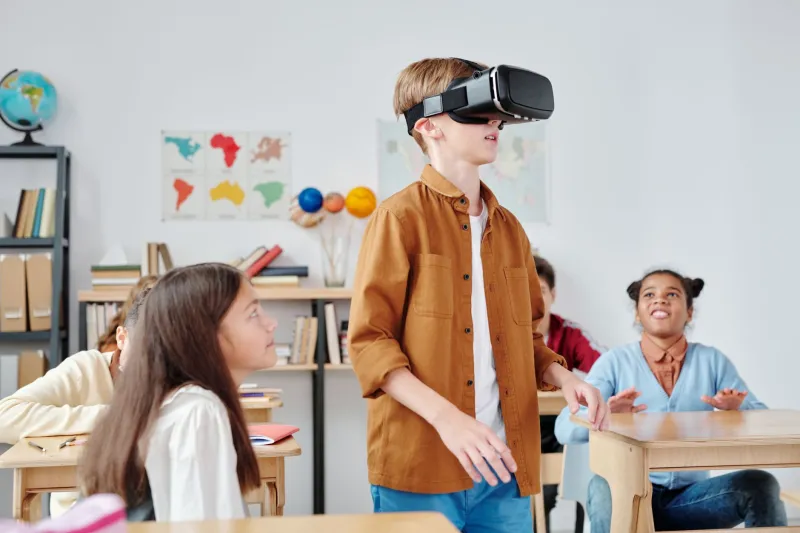
A district in the Pacific Northwest recently launched what administrators called a "flagship" metaverse learning initiative. They had the platform. They had the funding. They had students ready to enroll. What they didn't have, several months into the program, was enough qualified teachers willing to actually run the virtual classrooms.
They're not alone. Across the country, schools and districts that have invested heavily in metaverse education infrastructure are quietly struggling with a staffing problem that nobody anticipated — and that doesn't look anything like the traditional teacher shortage.
This Isn't Your Typical Staffing Crisis
When people talk about the teacher shortage in America, they're usually talking about rural districts, underfunded urban schools, and hard-to-fill subject areas like special education and high school math. The metaverse teacher shortage is a different beast entirely.
It's not primarily about compensation, though pay is rarely irrelevant in education. It's not simply about workload, though that's a genuine factor. What's emerging is something more complicated: a crisis of professional identity, credential misalignment, and a kind of psychological friction that most educators weren't trained to handle.
"I've been teaching for sixteen years," said one high school history teacher in Ohio who asked not to be named. "When they asked me to transition part of my classes to a virtual environment, I tried it for a semester. I felt like a completely different person in there — and not in a good way. I didn't recognize my own teaching anymore."
That sense of dislocation is something researchers who study educator experience in virtual environments are hearing repeatedly. And it's driving teachers away from metaverse programs faster than districts can recruit replacements.
The Identity Problem Nobody Talks About
Teaching is deeply personal work. The way an educator moves through a classroom, makes eye contact, adjusts their tone in response to a student's expression, commands attention through physical presence — these are not minor details. For many teachers, they are the craft.
In a metaverse classroom, most of that disappears. You're a voice and an avatar. Your years of learning how to read a room, how to use proximity to redirect a distracted student, how to signal warmth or authority through body language — suddenly none of that translates. You have to start over with an entirely different set of tools, and there's no guarantee that what made you excellent in a physical classroom will make you competent in a virtual one.
For teachers who've built their professional identity around their in-person presence, this is genuinely destabilizing. It's not laziness or technophobia. It's the unsettling experience of feeling like a beginner at something you've spent decades mastering.
"The first time I tried to manage a classroom conflict between two students through their avatars, I realized I had no idea what I was doing," recalled a middle school teacher from Georgia who left a metaverse pilot program after one year. "In a real classroom, I would have handled that in thirty seconds. In there, I froze."
The Credential Gap Is Wider Than Anyone Admits
Here's a structural problem that school districts are only beginning to grapple with: there is no standardized credential for teaching in a metaverse environment. None. A teacher with a state license and fifteen years of experience is, on paper, just as qualified to run a virtual classroom as someone who's never touched a VR headset — because the certification system hasn't caught up with the technology.
This creates problems in both directions. Districts can't screen for genuine virtual teaching competency during hiring. Teachers can't demonstrate it on a resume. And professional development programs, which are supposed to bridge skill gaps, are wildly inconsistent in what they offer.
Some districts are running two-hour workshops and calling it metaverse teacher training. Others have invested in multi-week immersive programs that simulate the virtual classroom experience before teachers ever set foot in one. The outcomes, predictably, are very different.
"I got a three-hour training session and then they handed me a class of twenty-eight seventh graders in a virtual world," said one teacher who participated in a district program in the Southeast. "I wasn't set up to succeed. I was set up to fail quietly."
The Teachers Who Are Making It Work
Not every story is a departure. There are educators who've adapted to virtual classrooms and found them genuinely energizing — but they tend to share certain characteristics that aren't evenly distributed across the teaching population.
Teachers who thrive in metaverse environments often have a background in game-based learning, theater, or project-based instruction. They're comfortable with ambiguity and novelty. They approach the avatar-mediated classroom not as a lesser version of the real thing but as a genuinely different medium with its own strengths.
"I stopped trying to replicate what I did in a physical classroom and started asking what this environment could do that a physical classroom couldn't," said a technology integration specialist in Colorado who now leads a virtual science program for rural students. "Once I made that shift, everything changed."
She describes building lessons around the unique affordances of the metaverse — taking students on simulated field trips to ecosystems they'd never visit in person, running experiments that would be impossible or dangerous in a real lab, and using the platform's built-in tools to give shy students new ways to participate.
"Some of my quietest students are the most engaged in the virtual environment. The avatar gives them a kind of cover that makes them braver. That's something I genuinely couldn't replicate in my old classroom."
What Districts Need to Do Differently
The schools managing this shortage most effectively aren't waiting for the credential system to catch up. They're building internal pipelines.
That means identifying teachers who are genuinely curious about virtual environments — not just willing to comply — and investing in them with real, sustained professional development. It means creating mentorship structures where experienced virtual educators support newer ones through the disorienting early phase. And it means being honest with teachers about what the transition actually involves, rather than selling it as a simple add-on to their existing role.
It also means rethinking evaluation. A teacher who's rebuilding their entire practice in a new medium shouldn't be assessed by the same metrics as someone teaching in a format they've mastered. Districts that apply traditional classroom observation rubrics to virtual teaching are measuring the wrong things and discouraging the experimentation that makes virtual education actually work.
The Bigger Picture
The metaverse teacher shortage is, in some ways, a preview of a larger challenge. As education continues to evolve — as virtual, hybrid, and AI-assisted learning become more central rather than experimental — the profession will need to develop new identities, new credentials, and new definitions of teaching excellence.
The educators who are navigating this transition successfully aren't just learning new tools. They're renegotiating their relationship with their own professional selves. That's hard, slow work — and it requires institutional support that most schools haven't yet figured out how to provide.
Until they do, the virtual classrooms will keep going understaffed. And the students inside them will keep paying the price.