No Ramps Required: How Virtual Learning Environments Are Rewriting the Rules of Inclusive Education
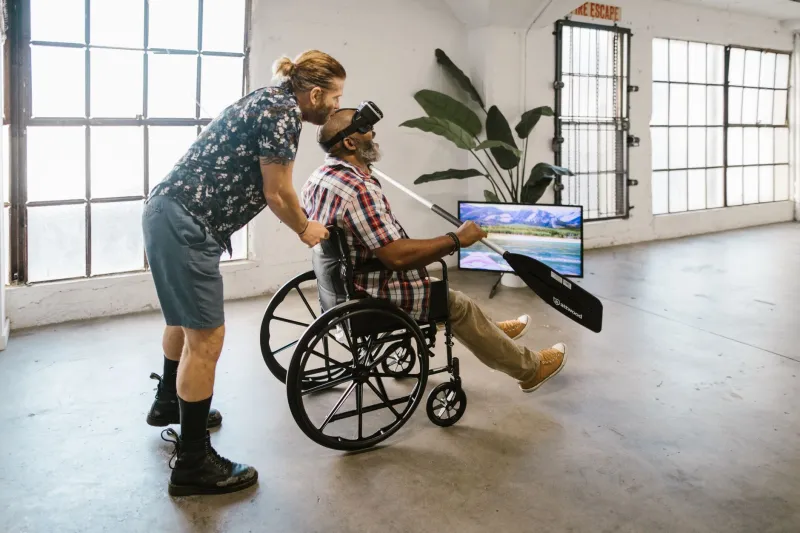
When Marisol was in third grade, her school's fire drill meant being carried down two flights of stairs by a paraprofessional while her classmates filed out on their own. She has spina bifida, and even with a wheelchair-accessible building, there were moments every single day that reminded her she was navigating a space that wasn't fully built for her.
Now imagine a classroom where the architecture bends to the student—not the other way around.
That's not a fantasy. It's what metaverse-based learning environments are starting to offer, and the implications for students with disabilities are genuinely profound. We're not talking about a slight upgrade. We're talking about a structural shift in who gets to participate fully in education.
The Problem With "Accessible Enough"
American schools have made enormous strides since the Individuals with Disabilities Education Act (IDEA) was enacted. Ramps, hearing loops, Braille materials, individualized education programs—these matter. But anyone who works in special education will tell you there's a gap between legal compliance and genuine inclusion.
Physical classrooms are inherently built around a default body. The desks, the hallways, the lab equipment, the gymnasium—all of it was designed with a neurotypical, fully ambulatory student in mind. Accommodations are layered on top, but the foundation stays the same.
Virtual learning environments flip that dynamic. When the environment itself is code, it can be rewritten. And that changes everything.
Mobility Without Limits
For students with physical disabilities—whether that's cerebral palsy, muscular dystrophy, or limb differences—one of the most immediate benefits of metaverse classrooms is the irrelevance of mobility.
In a virtual space, your avatar moves however you need it to. You can navigate a simulated chemistry lab, walk through a historical recreation of colonial Philadelphia, or participate in a collaborative building project without a single physical barrier. There are no stairs, no narrow doorways, no inaccessible restrooms.
Researchers at the University of Southern California's Institute for Creative Technologies have been exploring how immersive virtual environments reduce what they call "environmental friction" for users with physical limitations. Their early findings suggest that when students aren't spending cognitive and emotional energy navigating physical obstacles, they have more bandwidth for actual learning.
That's not a small thing. That's the whole point.
Sensory Customization as a Learning Tool
For students who are Deaf or hard of hearing, traditional classrooms present a constant negotiation. Lip-reading is exhausting. Background noise is a genuine barrier. Even in well-resourced schools with interpreters, a student who is Deaf is often working twice as hard just to access the same content as their hearing peers.
Metaverse platforms can integrate real-time captioning, spatial audio controls, and visual cues in ways that are baked into the experience rather than bolted on. Some platforms allow students to adjust the entire sensory profile of their environment—reducing background noise, increasing visual contrast, or switching between communication modalities without disrupting the rest of the class.
For students who are blind or have low vision, emerging haptic feedback technology and audio-first design in virtual environments are opening doors that physical classrooms—and even most digital platforms—have historically kept shut.
Neurodiversity and the Power of Customization
Perhaps the most underappreciated opportunity in metaverse education is what it offers students with cognitive and neurological differences—kids with autism spectrum disorder, ADHD, dyslexia, anxiety disorders, and more.
Consider the student with ASD who finds the unpredictability of a physical classroom overwhelming. The noise, the social cues, the transitions between activities—it's a lot. A virtual classroom can be structured with far more consistency and predictability. Avatars don't have unexpected emotional reactions. Environments don't change without warning. Students can even practice social interactions in low-stakes simulations before navigating them in real life.
For students with ADHD, some virtual platforms are experimenting with adaptive pacing—environments that respond to engagement signals and adjust the flow of content accordingly. For students with dyslexia, font size, spacing, and background color can be modified instantly, without anyone needing to make a special request or draw attention to a difference.
The customization isn't just cosmetic. It's pedagogical.
Avatars, Identity, and Dignity
There's something else worth naming here, and it's a little harder to quantify: dignity.
For students whose disabilities are visible—or whose bodies are frequently commented on, stared at, or treated as objects of curiosity—the ability to show up in a learning space as an avatar of their choosing is genuinely meaningful. They get to decide how they're represented. They get to lead with their ideas, their humor, their questions, rather than their diagnosis.
This doesn't mean virtual spaces erase disability or that students should feel pressure to "pass" as non-disabled. Many students choose avatars that authentically represent their disability identity, and that matters too. The point is agency. The metaverse gives students a kind of control over their own presentation that the physical world rarely affords them.
What Educators Need to Know Right Now
If you're a teacher or administrator reading this, you're probably wondering what any of this looks like in practice—especially in a public school with a limited budget and a packed IEP caseload.
Here's the honest answer: the technology is ahead of widespread implementation, but it's not out of reach. Platforms like AltspaceVR (now Microsoft Mesh), Engage, and VictoryXR are already being used in K–12 settings across the country. Some districts are piloting hybrid models where students with disabilities access virtual components of lessons that would otherwise be physically inaccessible to them.
The key is intentional design. Accessibility in the metaverse doesn't happen automatically—it has to be built in from the start. That means educators and platform developers need to be in conversation with disability advocates, special education specialists, and most importantly, students with disabilities themselves.
The students who have spent their whole lives adapting to spaces that weren't built for them? They have a lot of ideas about what actually works.
The Bigger Picture
Inclusive education has always been about more than compliance. It's about the belief that every student deserves a genuine shot at learning—not a modified, lesser version of it, but the real thing.
The metaverse isn't a magic fix. There are real questions about cost, equity, screen time, and the social dimensions of learning that virtual environments haven't fully solved. But for students who have spent years navigating a system that treats their needs as afterthoughts, the idea of a learning environment that starts with them? That's worth paying attention to.
The ramp was always a workaround. Virtual learning might finally be the door.