From Cornfields to Code: How VR Classrooms Are Leveling the Playing Field for Rural Students
Drive two hours outside of any major American city and the educational landscape changes fast. The AP Chemistry teacher retired and nobody replaced her. The robotics club folded when the budget got cut. The nearest college advisor is a 45-minute bus ride away — if the bus is even running. For millions of students in rural America, geography has always quietly determined destiny.
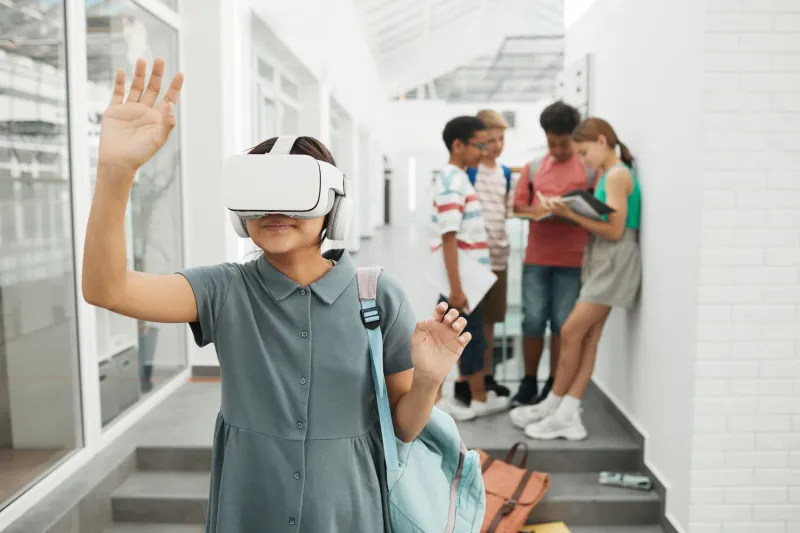
But something interesting is happening in places like Appalachian Kentucky, the Texas Panhandle, and the rural stretches of the Mississippi Delta. Students are strapping on headsets, stepping into virtual labs, and attending classes taught by specialists they'd never have access to otherwise. The metaverse — that buzzy, often misunderstood concept — is quietly doing something genuinely useful: showing up where it's needed most.
The Numbers Behind the Gap
Before we talk solutions, it helps to understand the scale of the problem. According to the National Center for Education Statistics, rural schools serve roughly 9.3 million students across the US, and they consistently lag behind suburban and urban counterparts in access to advanced coursework. Only about 55% of rural high schools offer calculus, compared to over 80% of urban schools. Access to AP courses, dual enrollment programs, and specialized STEM instruction is dramatically lower outside metropolitan areas.
The reasons aren't hard to find. Teacher shortages hit rural districts hardest. Tight budgets mean fewer elective offerings. And the simple fact of distance — from universities, from industry partners, from peer networks — creates a compounding disadvantage that follows rural students right into college admissions season.
Enter the Metaverse Classroom
Virtual learning environments built on metaverse infrastructure are starting to chip away at these barriers in ways that a Zoom link simply can't replicate. Unlike traditional video conferencing, metaverse-based platforms create immersive, three-dimensional spaces where students can collaborate on shared objects, run virtual experiments, and interact with content rather than just watch it.
Take the case of Breathitt County Schools in eastern Kentucky, one of the most economically distressed districts in the country. Partnering with a VR education platform, the district began offering virtual AP Biology and environmental science courses in 2022. Students could dissect virtual specimens, model ecosystems, and collaborate with classmates from other rural districts in a shared digital environment. Engagement metrics — attendance, assignment completion, course passage rates — improved meaningfully within the first year. Perhaps more telling: the number of students expressing interest in STEM-related college majors increased by nearly 30% among participants.
Or consider the Sioux Falls-adjacent districts in South Dakota that have piloted spatial computing labs, giving students access to virtual engineering challenges modeled on real-world industrial problems. Local employers, who'd struggled to find technically literate applicants, helped design the curriculum. That kind of industry partnership, previously available mainly to well-connected suburban districts, became possible because the metaverse removed the need for physical proximity.
What's Actually Working
School administrators and educators who've implemented these programs point to a few factors that separate successful rollouts from expensive disappointments.
Specialist access is the biggest win. A single highly qualified AP Physics teacher, working remotely inside a virtual classroom, can serve students across five rural districts simultaneously. The immersive environment makes it feel less like a remote lecture and more like a shared space — students can raise hands as avatars, work in small groups in breakout virtual rooms, and manipulate 3D models together in real time.
Peer collaboration gets a genuine upgrade. Rural students often describe a sense of intellectual isolation — there simply aren't enough classmates who share their interests. Virtual learning environments connect students across district lines, creating cohorts of like-minded learners. A kid passionate about computer science in rural Montana can now regularly collaborate with peers from rural Georgia, building the kind of network that urban students take for granted.
College readiness metrics are moving. Early data from districts using platforms like Prisms VR and Engage EDU suggest that students in immersive learning environments demonstrate stronger retention of complex concepts and higher scores on standardized assessments compared to control groups using traditional remote instruction. Counselors report that students who've experienced metaverse-based advanced coursework are applying to more selective colleges with greater confidence.
The Infrastructure Elephant in the Room
None of this works without broadband, and rural broadband access remains genuinely patchy. The Federal Communications Commission estimates that roughly 14.5 million Americans — disproportionately in rural areas — still lack access to high-speed internet. Running a VR headset in a shared virtual environment is bandwidth-hungry work.
But this challenge is being attacked from multiple directions simultaneously. The Infrastructure Investment and Jobs Act allocated $65 billion toward broadband expansion, with rural communities prioritized. Satellite internet providers like Starlink have dramatically changed the connectivity calculus in remote areas. And some districts have gotten creative — deploying mobile VR labs on buses that rotate between schools, or using school buildings as community connectivity hubs during off-hours.
Device access is the other hurdle. Standalone VR headsets have dropped in price considerably, with some educational-tier devices now available under $300. Federal E-Rate program funding has been expanded to cover certain immersive technology purchases, and several states have launched grant programs specifically targeting rural tech equity.
What Educators Are Saying
Talk to teachers who've made this transition and you hear a consistent theme: the technology isn't magic, but the access it provides is transformative.
"I teach chemistry to kids in three different counties now," said one educator working with a rural consortium in West Virginia. "Before, those kids in the smaller schools just didn't have chemistry at this level. Now we're doing virtual lab work that I'd put up against anything happening in a city school."
Administrators are equally candid about the learning curve. Training teachers to facilitate in virtual environments takes time and genuine investment. The technology requires ongoing technical support. And not every student takes to immersive environments immediately — some need adjustment periods and alternative access options.
A Genuine Shift, Not Just a Gadget
The honest assessment is this: virtual and metaverse-based learning isn't a silver bullet, and it shouldn't be oversold as one. Infrastructure gaps are real. Implementation requires serious commitment. And the technology is still maturing.
But the trajectory is clear. As headsets get lighter and cheaper, as broadband reaches deeper into rural America, and as educators build genuine fluency with these tools, the geographic lottery that has long determined the quality of a student's education is becoming easier to beat.
For a kid in a small town who wants to take AP Computer Science, study environmental engineering, or just find classmates who share her obsession with astrophysics, the metaverse isn't an abstraction. It's a door that wasn't there before — and it's starting to open.