Points, Prizes, and Pixels: Are Metaverse Classrooms Teaching Kids to Learn — or Just to Win?
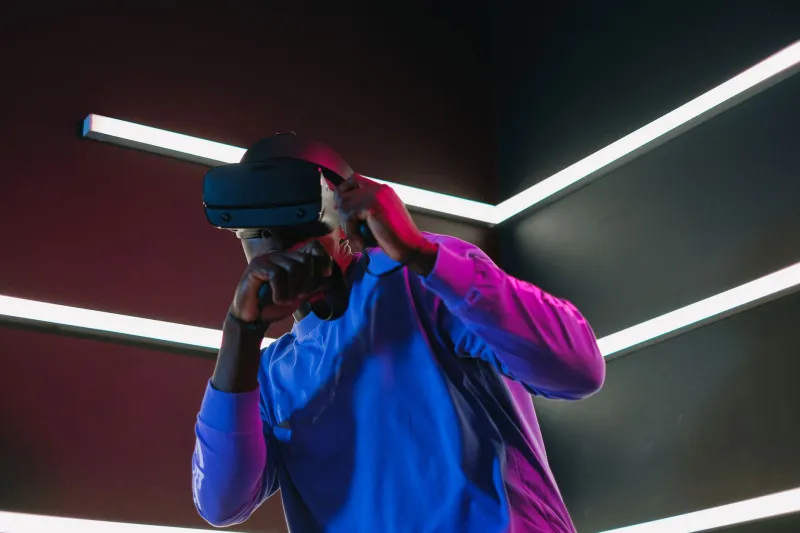
Walk into a traditional classroom and motivation looks pretty familiar — a gold star here, a good grade there. Now step into a metaverse learning environment and the whole thing gets a serious upgrade. Students are earning experience points for completing assignments, unlocking rare avatar accessories for acing quizzes, and watching their names climb leaderboards in real time. It looks like learning. It feels like a game. And honestly? Kids are showing up for it.
But here's the thing that's keeping some educators up at night: what happens to a student's desire to learn when the rewards disappear?
Why Gamification Works (At Least in the Short Term)
The psychology here isn't complicated — it's actually pretty ancient. Humans are wired to respond to feedback loops. When you do something and immediately see a result, your brain releases dopamine. It feels good. You want to do it again. Game designers figured this out decades ago, and now edtech platforms are applying the same logic to algebra and essay writing.
In metaverse classrooms, this plays out in some genuinely clever ways. Platforms like Roblox Education and Engage XR have built environments where students don't just answer questions — they inhabit the subject matter. A history lesson might drop students into a virtual recreation of the Boston Tea Party where participation earns them in-world currency to customize their avatar. A science module might reward accurate lab simulations with new virtual gear for their digital character.
The engagement numbers are hard to argue with. Schools piloting these approaches have reported attendance spikes and assignment completion rates that would make any district administrator smile. For students who historically checked out the moment they walked through the school doors, having something visually stimulating and immediately rewarding can be genuinely transformative.
The Neuroscience Gets Complicated
Here's where it gets tricky. Researchers who study motivation — particularly the distinction between extrinsic motivation (doing something for a reward) and intrinsic motivation (doing something because you genuinely care about it) — have been raising yellow flags for years.
The concern isn't new to gamification; it predates the metaverse by decades. A landmark body of research, much of it building on psychologist Edward Deci's self-determination theory, suggests that layering external rewards onto activities can actually undermine a person's natural curiosity over time. The technical term is the "overjustification effect" — basically, if you start paying someone to do something they already enjoyed, they may stop enjoying it the moment the payment stops.
Apply that to a ten-year-old who's earning avatar skins for reading comprehension exercises, and you've got a real question on your hands. Is that student developing a love of reading, or a love of earning avatar skins?
Neuroscientists who study adolescent brain development point out that the teenage brain is particularly sensitive to reward-driven feedback. That's not inherently bad — it's part of how young people learn to navigate the world. But it does mean that the design choices baked into metaverse learning platforms carry more weight than they might in an adult context. A poorly designed reward system in a virtual classroom isn't just bad pedagogy — it could be actively shaping how a student relates to the act of learning itself.
What Educators Are Actually Seeing in Their Classrooms
Teachers working inside these platforms tend to give a more nuanced picture than either the breathless press releases or the alarm-bell op-eds.
Many describe a genuine shift in student engagement — especially among learners who struggled in conventional settings. Students who rarely raised their hands are suddenly competing to answer questions because they want the points. Kids who dreaded group projects are collaborating enthusiastically inside virtual spaces. For these students, the gamification layer isn't a distraction from learning — it's the entry point to it.
At the same time, experienced educators are noticing patterns that give them pause. Some students become so fixated on the leaderboard that they rush through material without absorbing it, gaming the system rather than engaging with the content. Others hit a motivational wall the moment a lesson doesn't come with a visible reward attached. And there's the social dimension to consider — competitive leaderboards can be energizing for students at the top and quietly demoralizing for those stuck near the bottom, recreating the same dynamics that progressive educators have spent years trying to dismantle.
The consensus among thoughtful practitioners seems to be that gamification in virtual learning environments is a powerful tool that demands careful handling. Like most powerful tools, it can build something great or cause serious damage depending on who's using it and how.
The Design Question Nobody's Asking Loudly Enough
Lost in a lot of the enthusiasm around metaverse education is a fairly fundamental question: who is designing these reward systems, and what are they optimizing for?
Some of the biggest players in the edtech metaverse space come directly from the gaming and social media industries — sectors with a well-documented track record of prioritizing engagement metrics over user wellbeing. When a platform is measuring success by time-on-platform and daily active users, the incentives to design for deep learning rather than compulsive participation aren't automatically aligned.
This matters because the architecture of a reward system in a virtual classroom isn't just a technical decision — it's a pedagogical one. Whether a platform rewards effort or just correct answers, whether it celebrates progress relative to a student's own baseline or ranks them against peers, whether it builds in moments of reflection or just keeps the dopamine hits coming — these choices shape what students are actually learning about learning.
Educators and school administrators who are adopting metaverse platforms would do well to push hard on these questions before signing contracts. Ask vendors: what behaviors does your reward system reinforce? How does it handle students who are struggling? What does the research base behind your engagement mechanics actually look like?
Finding the Balance Between Fun and Substance
None of this means gamification is the enemy. At its best, it's a genuinely useful bridge — a way to get students into a learning experience that might otherwise feel inaccessible, and to keep them there long enough for something real to happen.
The educators seeing the most success with gamified metaverse learning tend to use rewards as a scaffold rather than a destination. They pair external incentives with explicit conversations about why a subject matters. They design challenges that are intrinsically interesting, not just reward-adjacent. They treat the leaderboard as one tool among many, not the organizing principle of the entire classroom.
The goal, ultimately, isn't to produce students who are great at chasing digital rewards. It's to produce students who are genuinely curious, resilient in the face of difficulty, and capable of finding meaning in the act of learning itself — even when nobody's handing out XP for it.
The metaverse gives educators an extraordinary canvas to work with. The question is whether the platforms we're building on that canvas are designed to serve students' long-term growth, or just to keep them clicking. That's a question worth asking loudly, and often.