Logging Off for Good: Why Virtual Students Are Disappearing — and How Schools Can Stop the Exodus
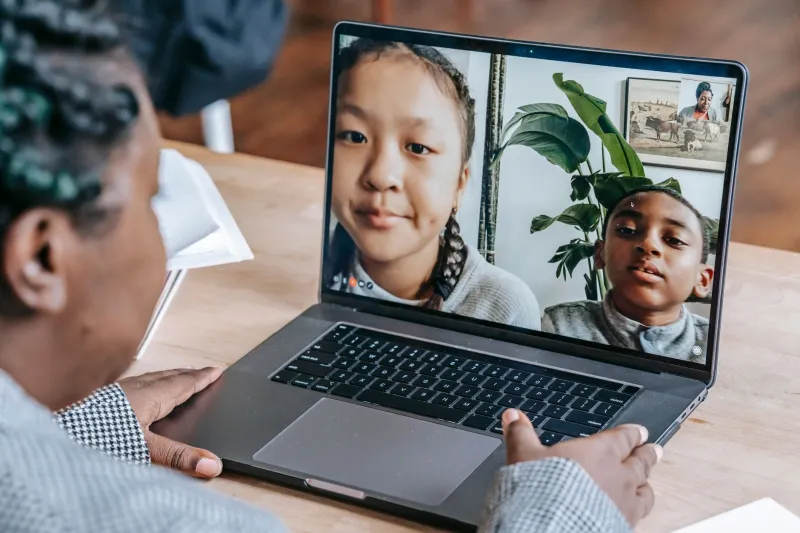
It starts with a skipped session. Then another. By week six, the student's avatar is a ghost — visible in the roster, absent from the virtual room. Teachers in metaverse programs across the country are noticing the same pattern, and it has a name: virtual attrition. And it's happening faster than many districts expected.
Metaverse learning was supposed to fix the engagement problem. Immersive environments, interactive simulations, personalized avatars — all of it designed to make education feel less like a chore and more like an experience. But somewhere between the promise and the practice, students are finding reasons to check out. Understanding why — and what schools can actually do about it — has become one of the most urgent conversations in digital education right now.
The Numbers Behind the Disappearing Act
Precise national data on metaverse-specific dropout is still emerging, but early signals from pilot programs and district-level reports are hard to ignore. A 2023 survey of immersive learning coordinators found that roughly one in four students enrolled in full-semester virtual programs showed significant disengagement by the midpoint — defined as missing more than 30% of sessions or failing to complete core interactive assignments.
That number climbs in lower-income districts, where technical access issues compound the psychological barriers. But even in well-resourced schools, retention isn't guaranteed. The assumption that novelty alone would carry students through a semester turned out to be exactly that — an assumption.
"The first two weeks, kids were absolutely hooked," recalls one middle school technology integration specialist in suburban Ohio. "By week five, I had students telling me they'd rather just read the textbook. That was a wake-up call."
Why Students Tune Out
The reasons students abandon virtual classrooms aren't always obvious, and they rarely come down to a single cause. Researchers and educators point to a cluster of overlapping factors.
Cognitive fatigue is real and underestimated. Extended time in VR environments places unusual demands on the brain — processing spatial information, managing avatar movement, and keeping up with instruction simultaneously. Without intentional design breaks, students hit a wall that feels less like boredom and more like exhaustion.
Social isolation in a supposedly social space. This one surprises a lot of people. Metaverse classrooms are technically social environments, but many students report feeling more isolated in them than in traditional online video calls. When interaction feels performative — moving an avatar through a scripted activity — it doesn't scratch the same itch as genuine connection. Students who don't feel seen tend to stop showing up.
Technical friction as a dropout trigger. Laggy headsets, incompatible devices, confusing interfaces — every technical stumble chips away at a student's willingness to keep trying. For students already navigating difficult home environments, troubleshooting a VR platform at 7 PM isn't an inconvenience. It's a dealbreaker.
The "why does this matter" gap. When students can't connect virtual activities to real-world relevance, motivation collapses. Exploration for its own sake has a short shelf life. Purpose-driven immersion — building something, solving something, creating something — lasts longer.
What Separates Programs That Work
Not every metaverse classroom is bleeding students. Some programs are beating retention benchmarks by wide margins, and the differences between them and the struggling ones are instructive.
The programs holding students tend to share a few key traits. First, they treat the virtual environment as a tool, not the destination. The technology serves a learning objective that students can articulate. Second, they build in regular low-pressure social touchpoints — unstructured time for students to interact in the virtual space without a task attached. Third, they have a dedicated technical support pathway that doesn't put the burden of troubleshooting on the student or the teacher.
A high school in suburban Atlanta running a metaverse-based environmental science curriculum reported a 91% completion rate last year. Their approach? Weekly "open world" sessions with no formal instruction, paired with a student tech ambassador program where older students helped younger ones navigate platform issues. "We stopped treating the metaverse as a classroom and started treating it as a community," their program coordinator explained. "That changed everything."
Practical Strategies Educators Can Use Now
You don't need to overhaul your entire program to start moving the needle on retention. Here are approaches that educators in the field are actually using.
Shorten the immersive blocks. Most engagement research suggests that 20-30 minute immersive sessions outperform 60-minute marathon sessions for middle and high schoolers. Build in transitions, reflection pauses, and low-tech activities between VR segments.
Make attendance visible — in a good way. Gamified attendance trackers, streak rewards, and peer accountability structures give students a low-stakes reason to keep showing up even when motivation dips.
Create student ownership opportunities. Let students design elements of the virtual environment, lead a session, or present their work as an in-world experience. When students have something at stake in the space, they show up to protect it.
Establish a "no-fault" re-entry path. Students who fall behind in virtual programs often don't return because they feel too far gone. A clear, judgment-free process for catching up removes that barrier and signals that the door is always open.
Survey students mid-semester, not just at the end. By the time an end-of-course survey lands, the students you most need to hear from have already left. A five-question check-in at week four or five gives you actionable data while there's still time to respond.
The Bigger Picture
Virtual attrition isn't a technology problem. It's a design and support problem. The metaverse has genuine potential to transform how students experience learning — but only if the humans building these programs stay honest about what's working and what's not. Chasing novelty without addressing the fundamentals of connection, relevance, and accessibility will keep producing the same result: empty virtual seats.
The good news is that the schools cracking the retention code aren't doing anything magical. They're listening to students, staying flexible, and remembering that the point was never the metaverse itself. The point was always the learning.